A Qatari wedding is one of the most photographed days of your life, and what you wear sits at the centre of every frame. The good news: there isn't a single "correct" answer. There are three strong routes, and the right one depends on the formality of the event, your role in it, and how you want to feel walking in.
For many grooms and guests, the thobe is the natural choice. It is rooted in the occasion, comfortable in the heat, and unmistakably appropriate. But a wedding thobe is not an everyday thobe. The difference is in the details: a crisp collar, clean cuffs, the right weight of fabric, and — above all — a cut that sits properly on your shoulders rather than hanging loose.
If you are the groom, this is where bespoke earns its place. A thobe made to your measurements drapes cleanly, moves well when you sit and greet guests, and photographs sharp rather than shapeless. Pair it with a well-chosen bisht for the ceremony and the effect is quietly commanding.
For a more formal or mixed reception, a bespoke suit is hard to beat. A navy or charcoal suit cut to your frame reads as confident and modern, and it works whether you are the groom, the best man, or a guest who wants to look considered without overshadowing anyone.
The key word is cut. An off-the-rack suit is built for an average body; a made-to-measure one is built for yours — clean through the shoulders, closed at the collar, with a trouser break you actually chose. On a day full of standing, embracing, and photographs, that fit is the difference between looking dressed and looking tailored. We break down exactly what goes into that in The Anatomy of a Bespoke Suit.
Whatever you choose, fit is the thing the camera notices first.
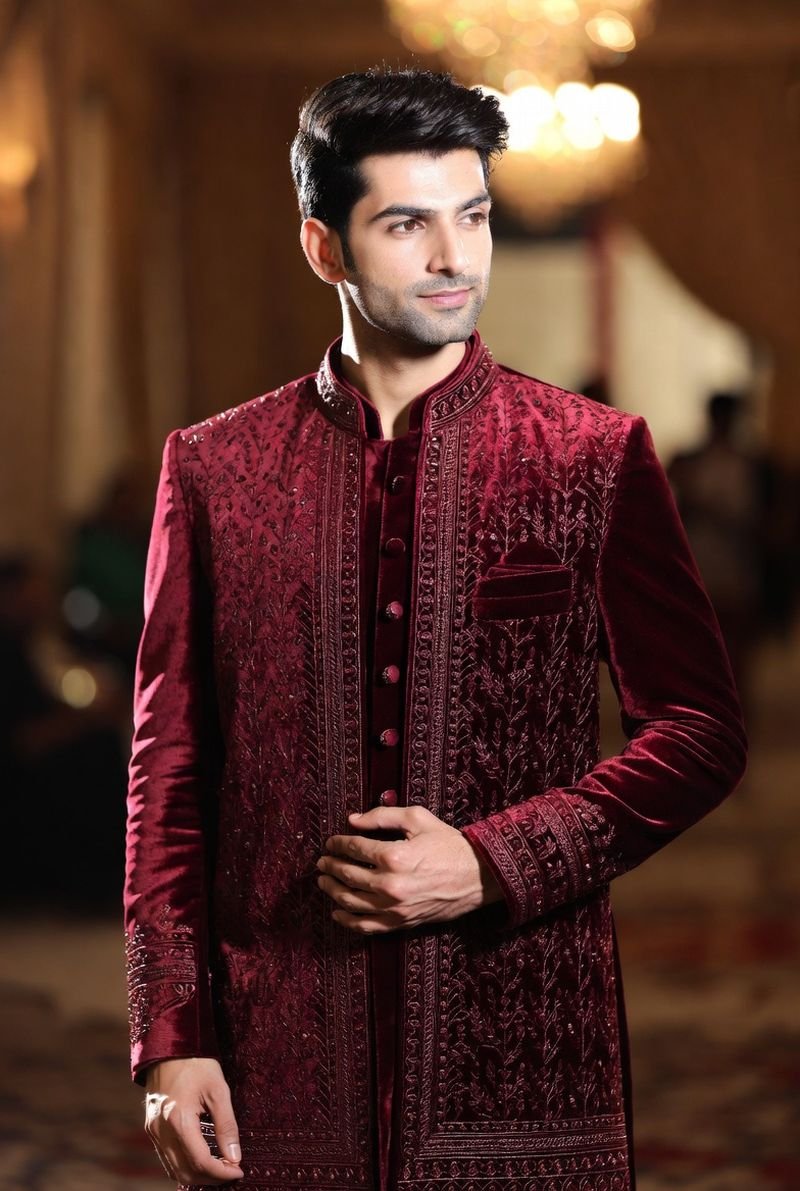
When the groom wants real ceremonial presence, the sherwani delivers it. Structured, richly detailed, and designed to be looked at, it turns the groom into the clear focal point of the room. It rewards good tailoring more than any other option here: the collar has to stand correctly, the length has to be judged to your height, and the fit through the chest has to be exact for it to look regal rather than borrowed.
A sherwani is also the most personal of the three — fabric, embroidery, buttons, and finishing can all be chosen to match the wedding's palette and your own taste.
Thobe, suit, or sherwani — the single factor that separates "well dressed" from "unforgettable" is fit. A brilliant fabric hanging off the wrong cut still looks off; a simple garment cut precisely to you looks expensive. That is the whole argument for making it to measure.
If you have a wedding on the calendar, tell us the date and your role, and we will help you choose and build the right piece with time to spare.
 THE FECUND